Portfolio Case Study
Designing for Empathy & Sustainability
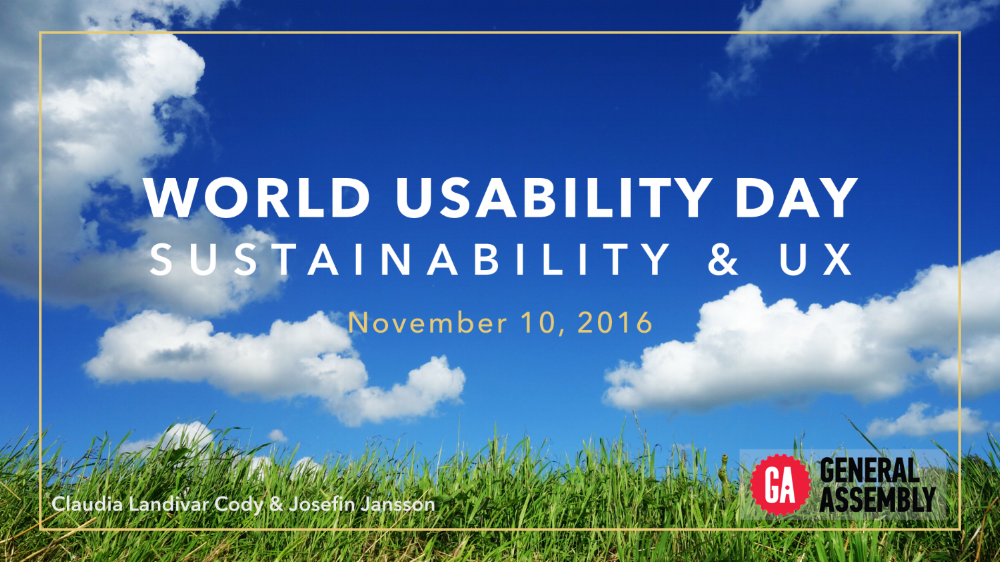
World Usability Day | November 10, 2016
Planning Timeframe. 1 month
Tools. Research, Collaborative Design, UX Writing, Presentation
Design & Facilitation Team.
Claudia Landivar-Cody & Josefin Jansson
Deliverables. Design Exercise, Facilitation, Presentation
Institutional Partner. General Assembly, San Franciso
Event Photography. Anna Newman
This project focused on designing and facilitating a collaborative UX workshop for World Usability Day 2016. Co-facilitator Josefin Jansson and I shaped an event that used design methods to explore empathy, shared understanding, and sustainable systems in practice.
We called it applied empathy — building structures that help people listen, co-create, and act with intention. The experience strengthened my approach to facilitation and design, and the same principles continue to guide my current work in AI alignment, content governance, and human-centered strategy.
Josefin Jansson and I partnered with General Assembly to create an event for the UXPA's World Usability Day 2016. The worldwide theme was Sustainable Design, focused on the United Nations' Sustainable Development Goals.
We wanted to spur local conversation on how design thinking can contribute to meaningful change. We also thought people would be interested in learning more about the SDGs and ongoing sustainability efforts worldwide. Finally, we wanted to give UX professionals an experience of mindfully integrating empathy into their ideation process.
At A Glance…

Project Type
UX Workshop
Design & Facilitation

Format
Collaborative design sprint focused on empathy, systems thinking, and sustainable design
Skills Shown
Facilitation · UX Research · Systems Thinking · Empathy Mapping · Content Strategy · Ethical UX
5-page PDF
Deliverables
Workshop plan · Sprint framework · Participant materials · Presentation slides
Creating a Practicum in Applied Empathy
Josefin and I were both excited about the UXPA's 2016 focus on sustainable design. It had long-term potential for worthwhile projects, with plenty of scope for collaboration and skill growth.
The topic seemed like a natural fit for General Assembly SF’s programs and they agreed to sponsor an evening design event for World Usability Day 2016. It was up to Josefin and me to create the content and host it.
DEFINING THE EVENT
During the two-hour event, we'd need to explain the relationship between UX, sustainability, and the UN's Sustainable Development Goals (SDGs). We also wanted to give participants time for hands-on work. We planned to give a succinct overview of the SDGs and then reference them in the practical exercise.
Explaining the Topic
The 17 SDGs themselves were developed to address barriers to development. They were meant to be easy to understand, but both of us found the UN's background information dense and complex. We couldn’t figure out how local SDG programs got started. Trying to find the balance between information and context was a walk through the wilderness.
Hands-On
At the same time, we were interested in strengthening active listening and empathy in the design process. We had both experienced design collaborations that veered away from those intangible but powerful standards. Though people are often more comfortable pursuing a concrete result, this focus can short-circuit opportunities for discovery and insight.
We decided to design an exercise focused on creating an environment for active empathy, turning the participant's focus toward listening, communicating, and mutual understanding.
What Are the UN Sustainable Development Goals?
Through the United Nations, the global community formulates big-push projects that span 15 years. In 2015, the UN member states met to agree on another continuing series of goals.
This new set of goals builds on progress from the UN’s own 2000-2015 Millennial Development Goals. It was meant to be concise, easy to communicate, action-oriented, and aspirational. The resulting 17 Sustainable Development Goals (SDG) from 2016 were both high-level and foundational to overcoming sustainable development barriers.
Can the UN pull this off?
Yes! The UN's 2000-2015 Millennium Development Goals overshot it's goal of reducing global poverty by 5%, shooting past an 18% reduction to under 12% by the 2015 deadline.
Emma Watson narrates this lesson showcasing UN SDG changemakers from every corner of the world.
The 17 SDGs apply to any country around the world. Government, NGOs, community groups and even individuals can create projects. These should be self-defined, from local priorities — but linked to SDG goals.
Our Mini-Sprint Inspirations
Behavior has a huge effect on creating relationships and shaping contexts. Yet, because it's ephemeral and intangible, its impact is often overlooked in problem-solving.
To help participants cultivate their own capacity for empathy during the design process, we put together an exercise meant to prime them for empathy, and to root each group's collaboration in mutual understanding and communication.
Specific inspirations we drew from were Nominal Group Technique, an active listening priming excercise we learned from Billie Mandel, and Robert Heinlein’s concept of profound and intuitive understanding.
Nominal Group Technique
While researching creative problem-solving methods that maximize group participation, I came across the Nominal Group Technique (NGT). This group process about problem identification, solution generation, and decision making has been shown to result in a greater variety of unique ideas of higher overall quality. NGT participants also report more efficient group work, and more satisfaction in the ideation process.
NGT seemed to address some common pitfalls of group ideation. I definitely wanted to incorporate it into our sprint.
Active Communication — Preparing to Listen
During a workshop with Billie Mandel, she drove home the impossibility of really hearing someone else if your own mind is busy preparing to speak. We incorporated her intentional listening exercise into the structure of our design exercise.
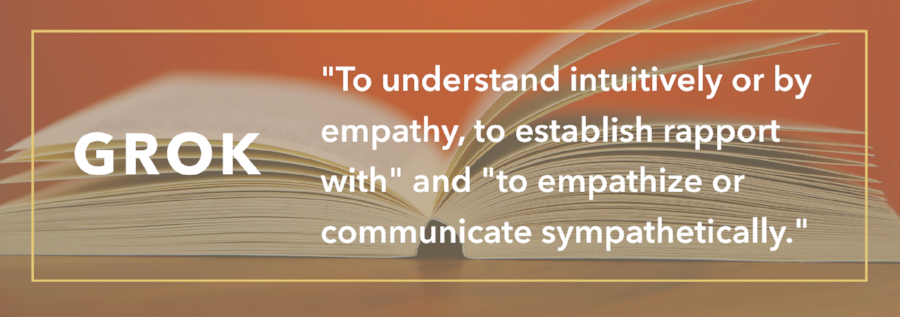
Stranger in a Strange Land
Finally, to help convey our practical empathy concept, we planned a discussion of the concepts behind the word grok from Robert A. Heinlein's 1961 Stranger in a Strange Land.
Our Final Mini-Sprint Design
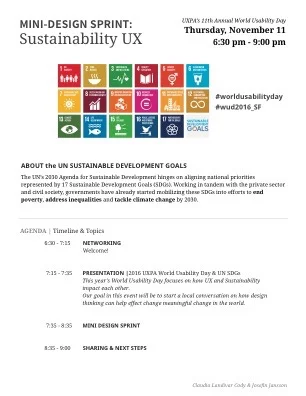
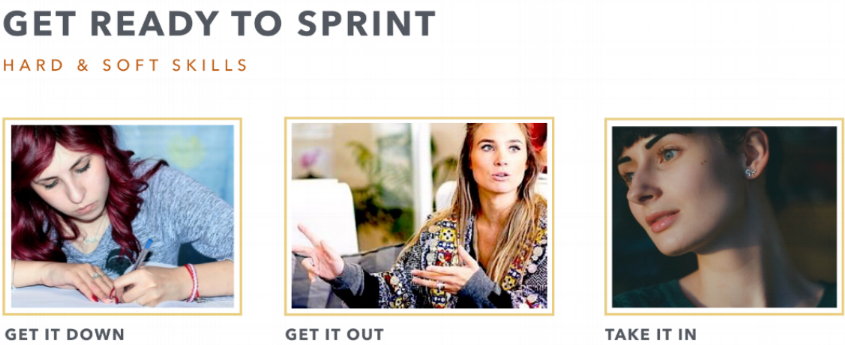
We structured our mini-sprint with distinct segments that would also allow participants to re-focus their own desired behaviors at every stage.
Our plan was to provide behavioral prompts before and during the exercise, to coach the group away from habitual responses.
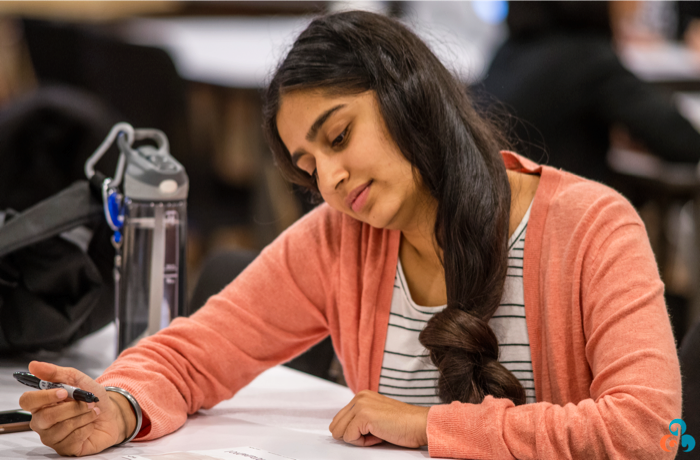
Each participant would have five minutes to independently write or sketch ideas, questions, and inspirations.
The prompt? To avoid self-judging or filtering ideas.
Step 1 - Ideation
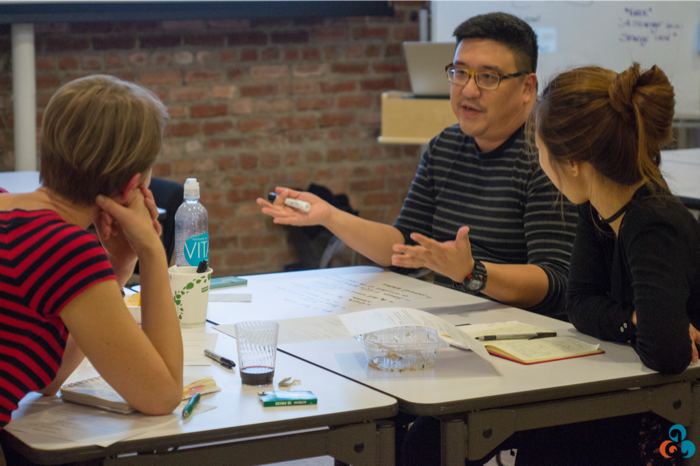
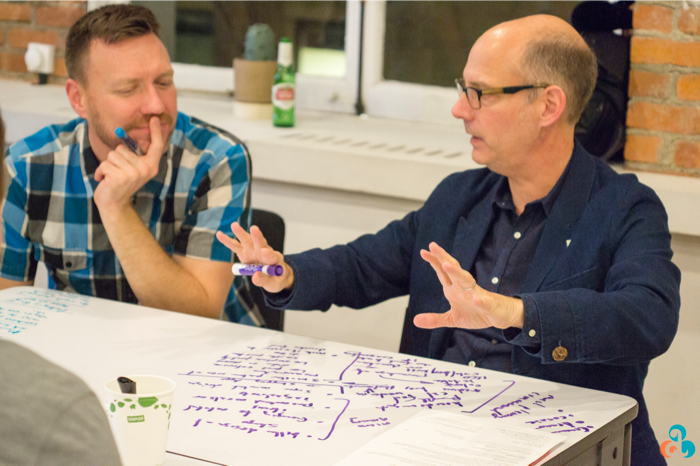
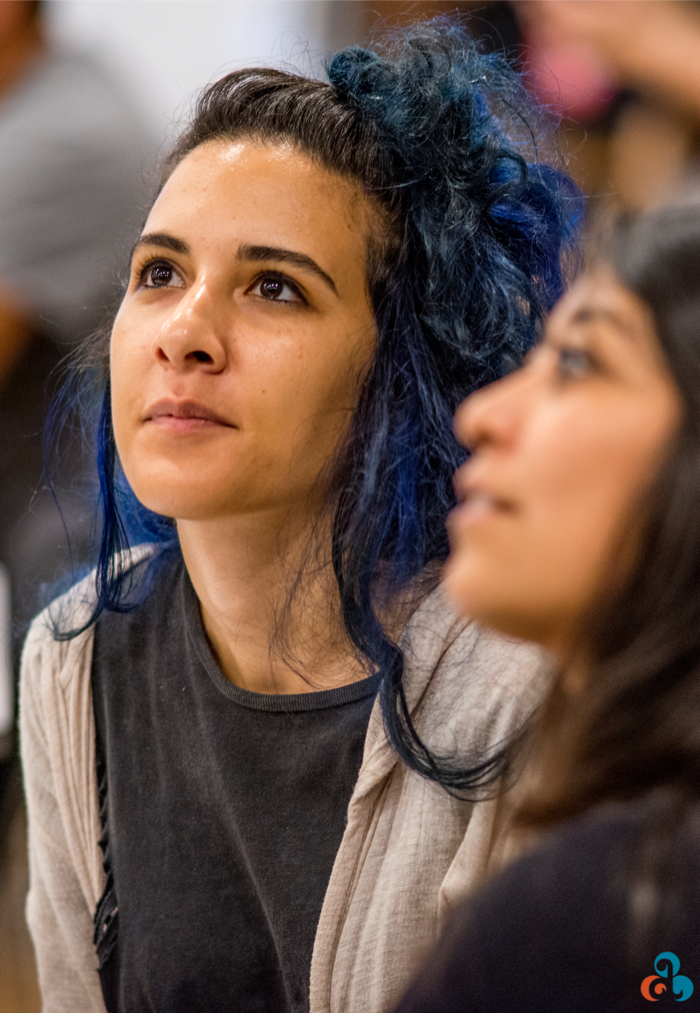
Then, groups of 3 to 4 would take turns explaining and listening to one another's ideas, without judging or eliminating them. The key practice here would be active communication when speaking and listening.
Listeners would be encouraged to take notes and ask neutrally phrased clarifying questions.
For behavioral support, we would remind participants to consciously engage their emotional and social awareness during the process. Like a focus on breath during meditation, each person's attention to the feelings, contexts, and intentions of others would result in more nuanced communication and listening. Prompts would include:
Continually assess how accurately your message is being received, and adjust your method or style so it's clearer
Continually assess your understanding of the speaker's communication style and emotional state. How might this impact their intended meaning?
Step 2 - Round Robin
Step 3 - Group Discussion
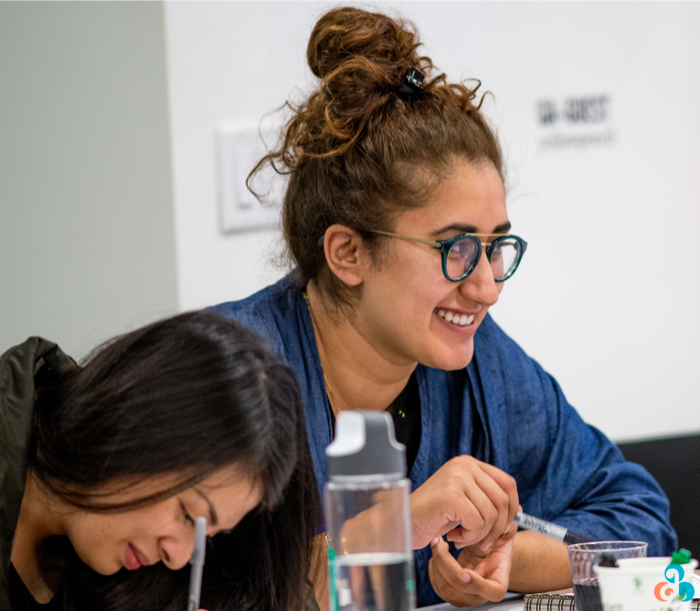

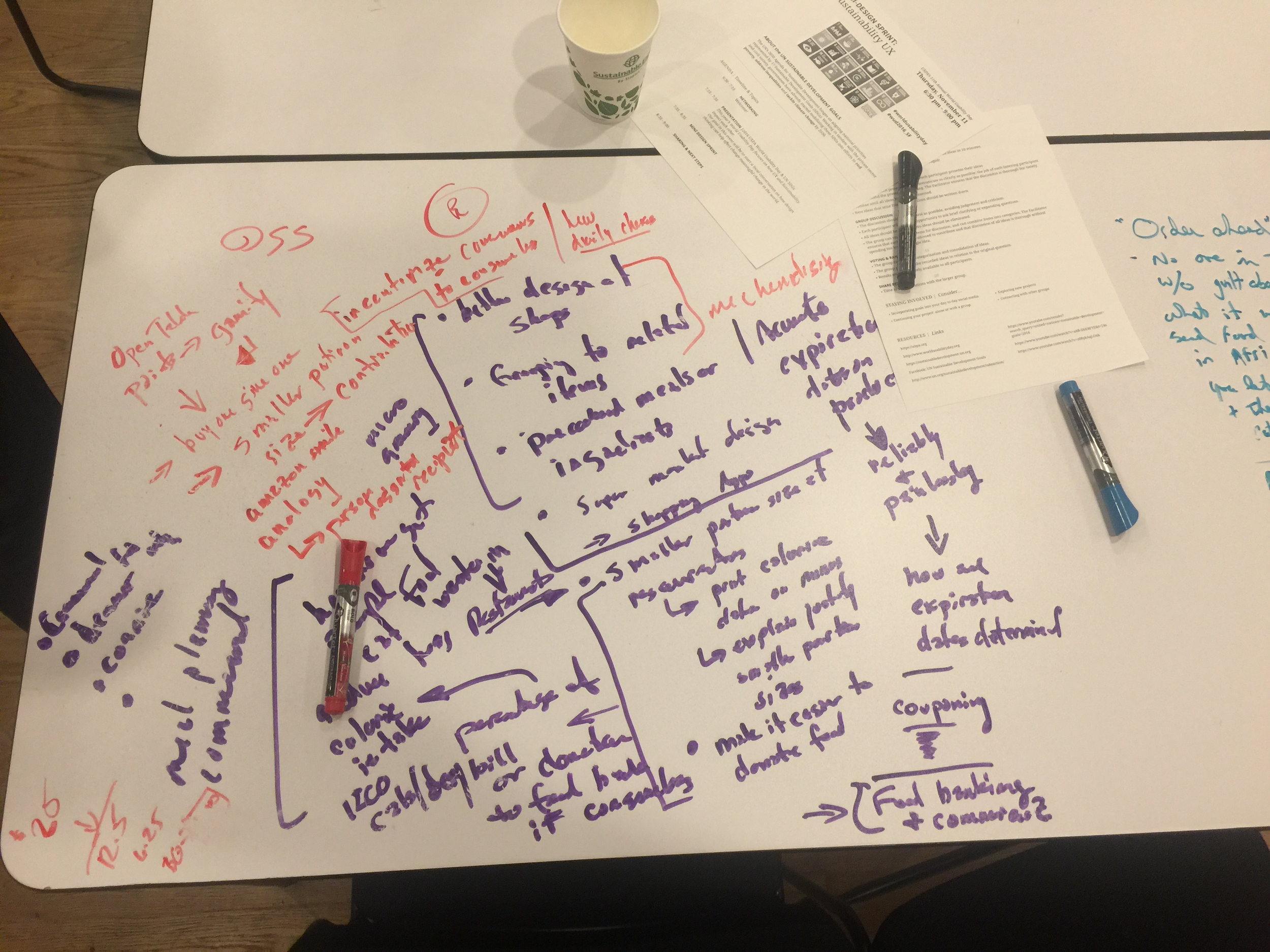
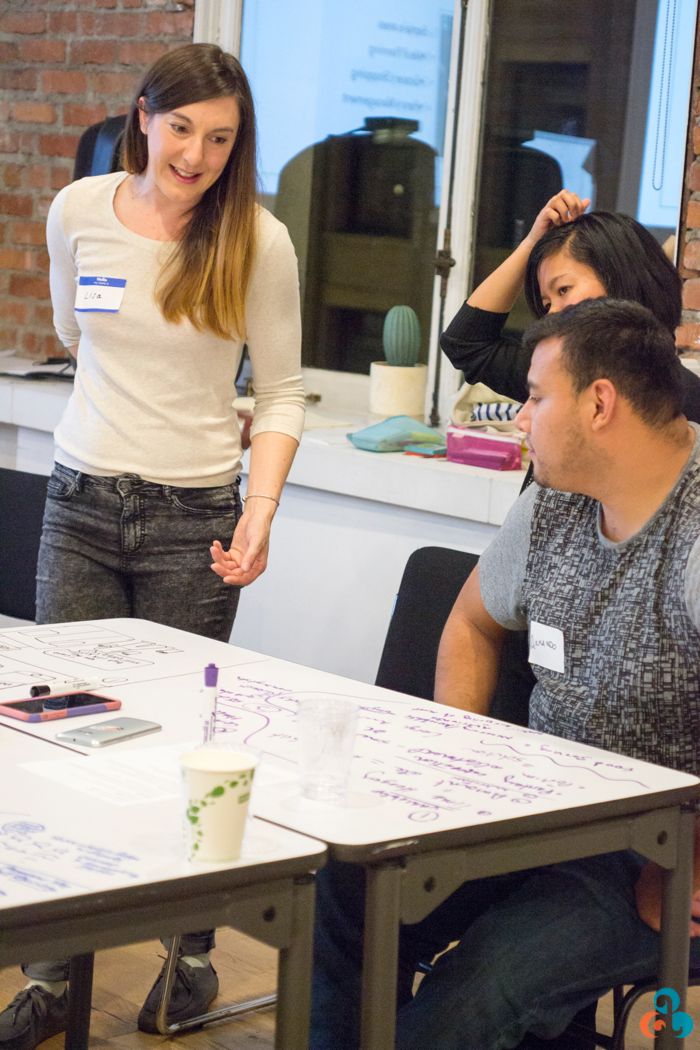
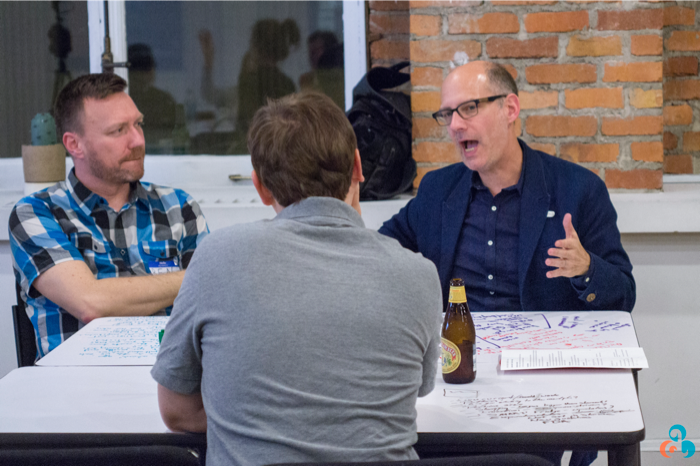
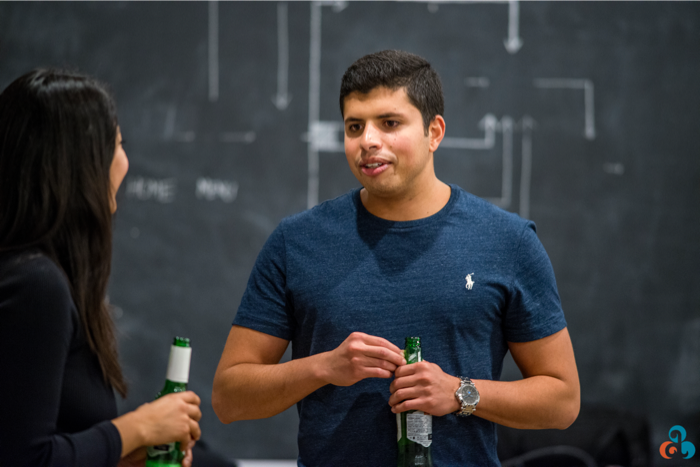
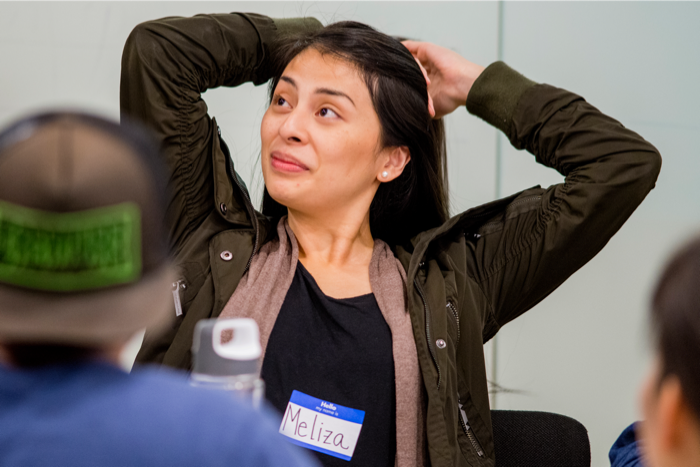
During discussion, each group would freely discuss all ideas — without eliminating any from consideration.
Step 4 - Integrate Ideas
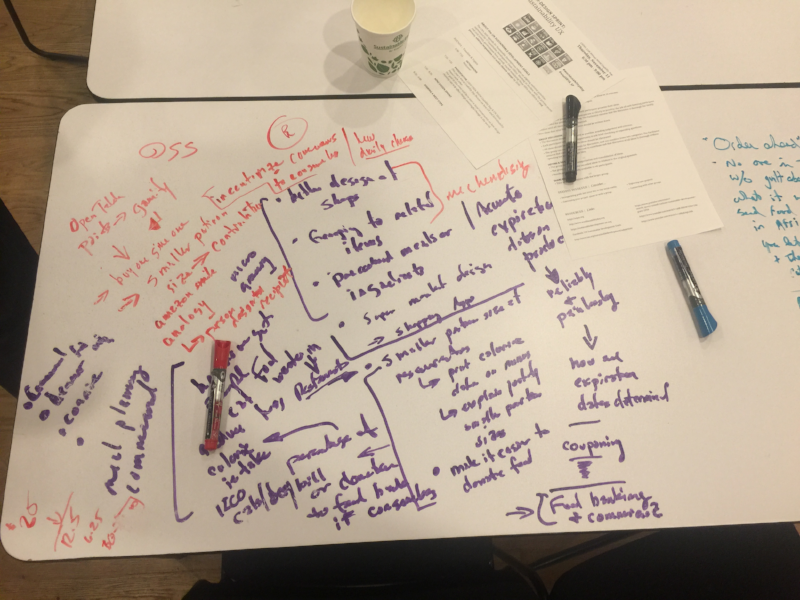
Step 5 - Present Solutions
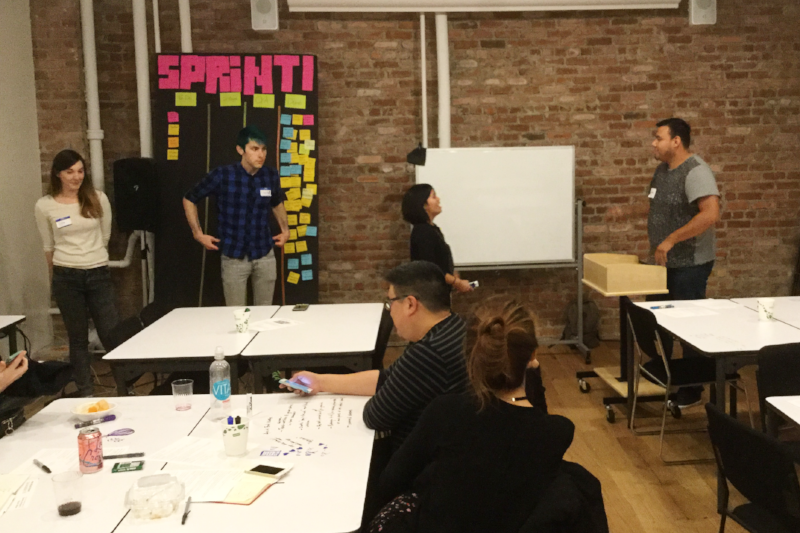
Then, the group would consolidate and prioritize the collection of ideas, to create a solution. They would be prompted to refer back to the challenge, context and personas.
Finally, each group would present their findings and solution.
The Event
EXERCISE SUPPORT
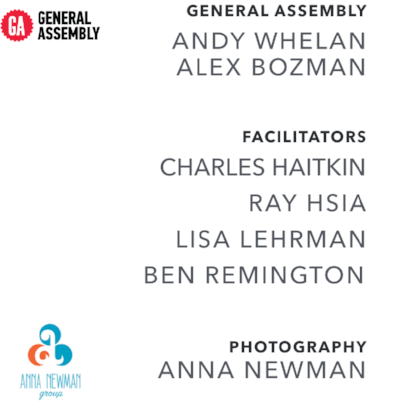
To help keep time and counter the natural tendency to focus on perceived outcomes rather than process, we lined up volunteer facilitators: Charles Haitkin, Ray Hsia, Lisa Lehrman, and Ben Remington. During the workshop, each one was assigned to a group.
GETTING STARTED
To keep group focus on the process, we decided to only disclose the design prompt after explaining the process.
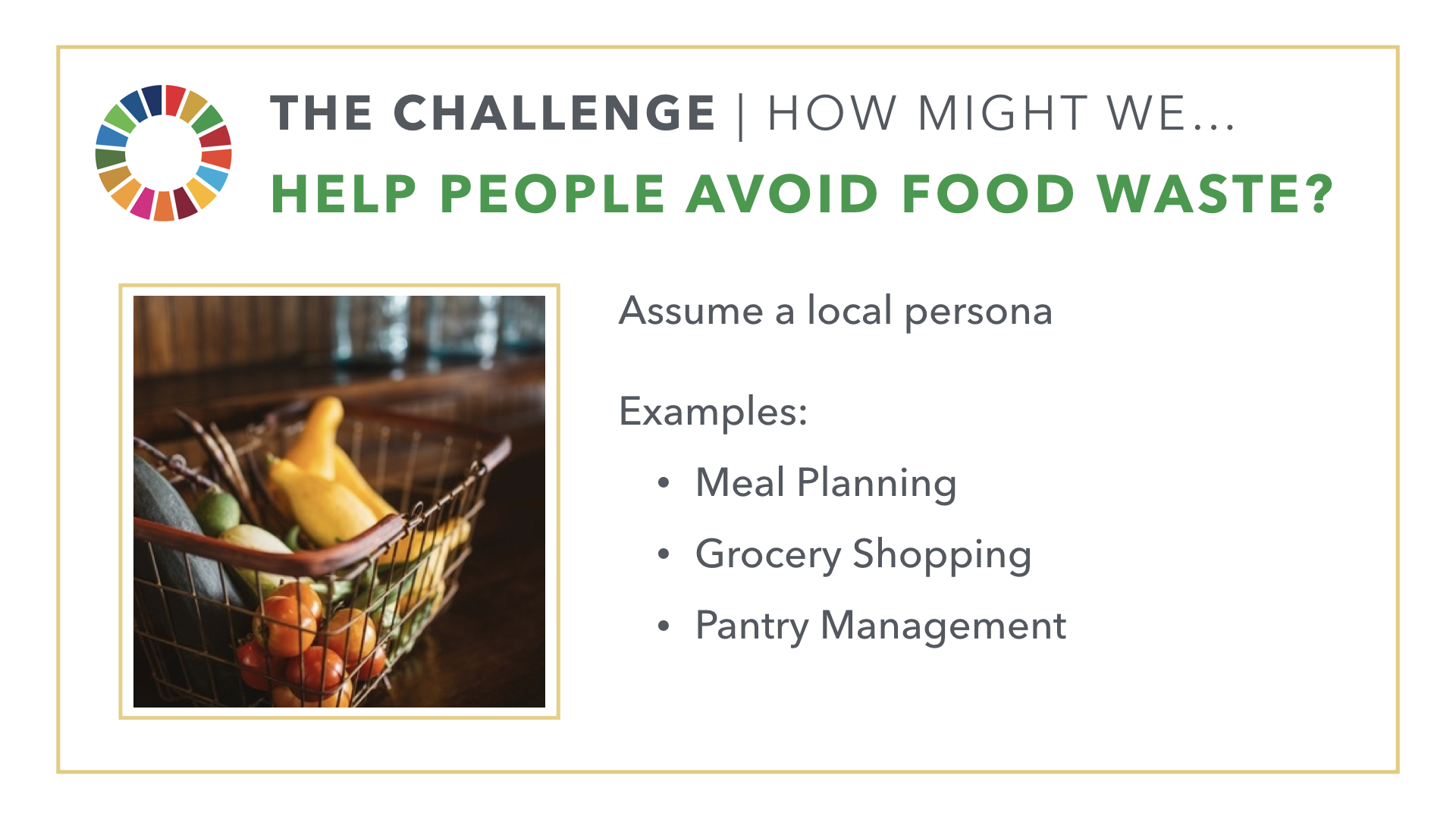
For the topic, we chose a relatively ‘simple’ challenge from the UN's community-oriented suggestions:
How might we help people avoid food waste?
AND WE'RE OFF!
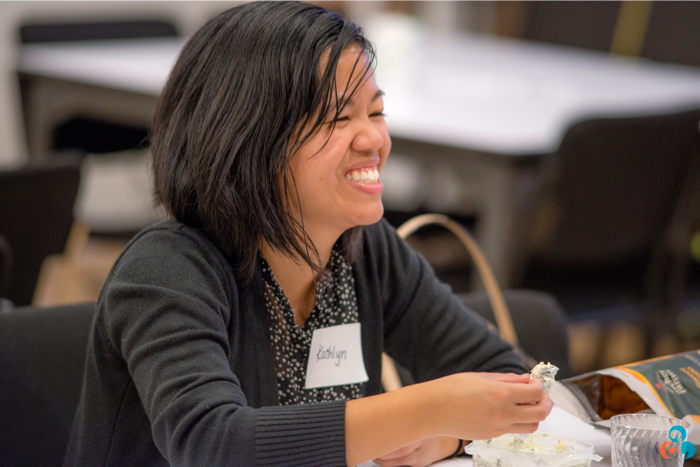
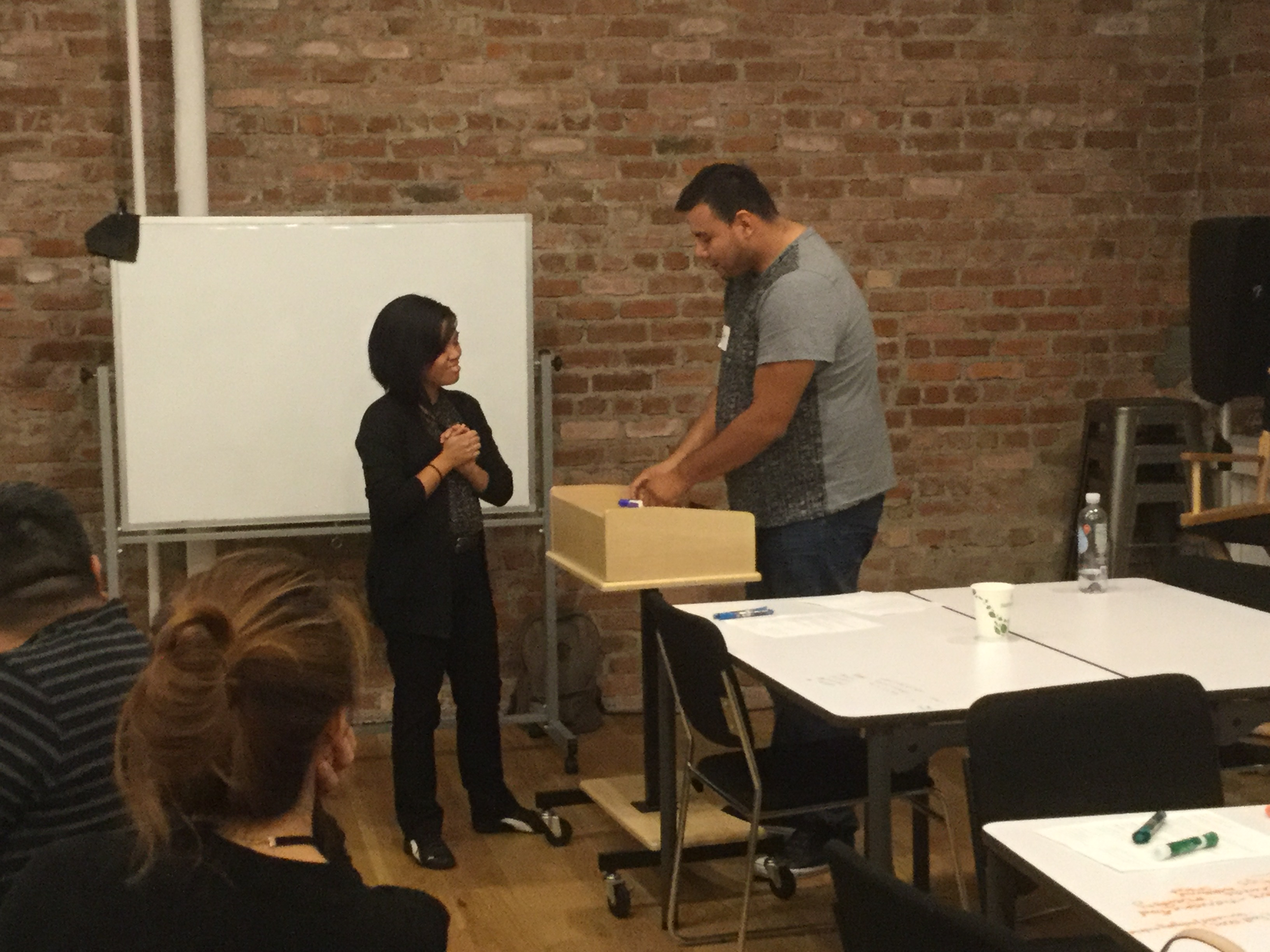
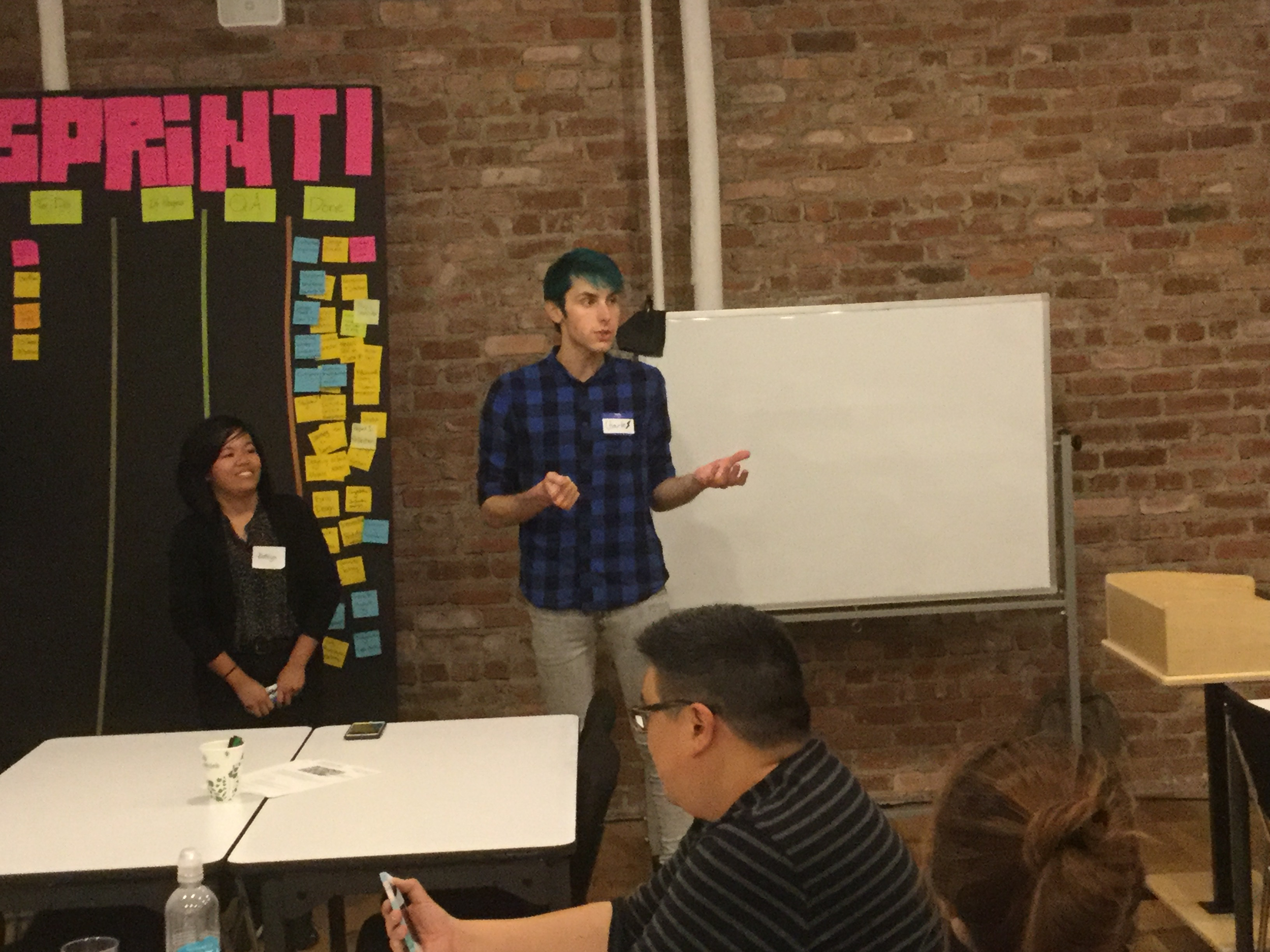
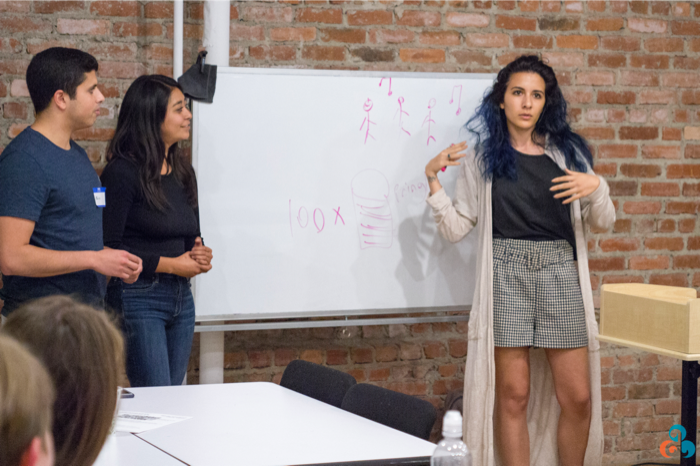
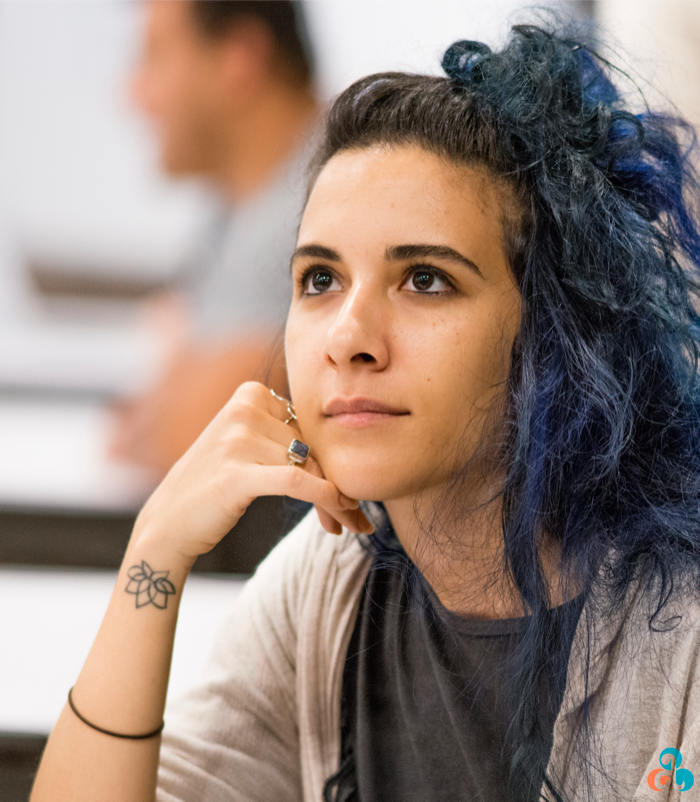
During the workshop part of the evening, each group was engaged and seemed really unified in identifying and solving problems. Nobody was hanging apart from their group. Walking through the room, I didn't catch the awkward vibe of frozen politeness you see when professional identity clashes with a person feeling dismissed or overlooked.
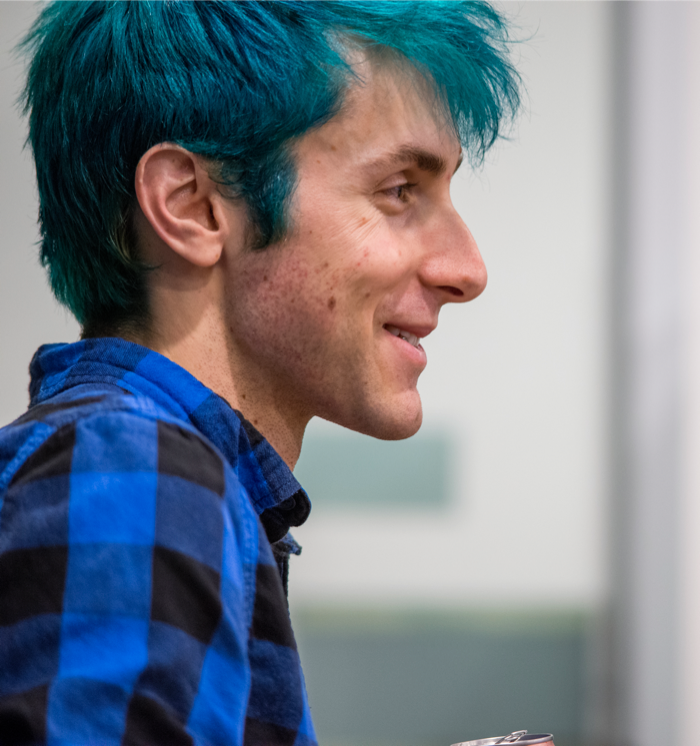
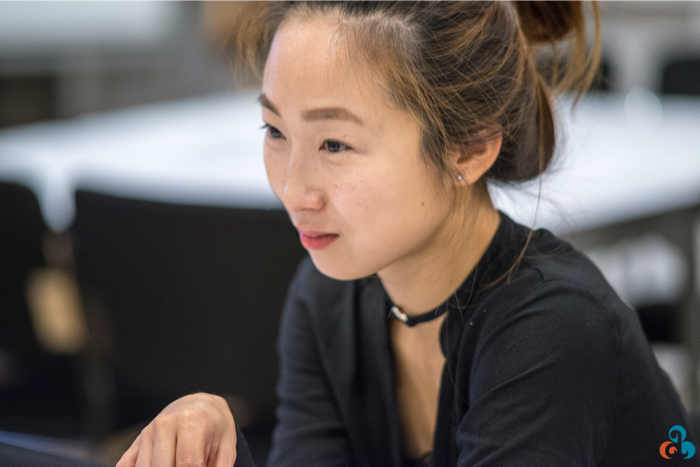
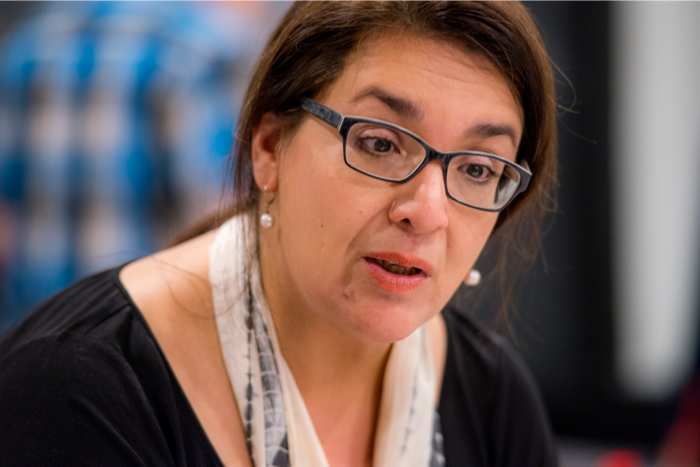
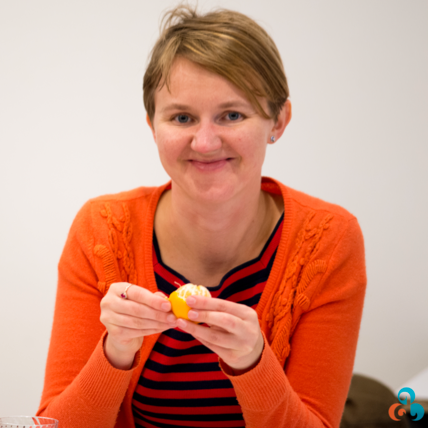
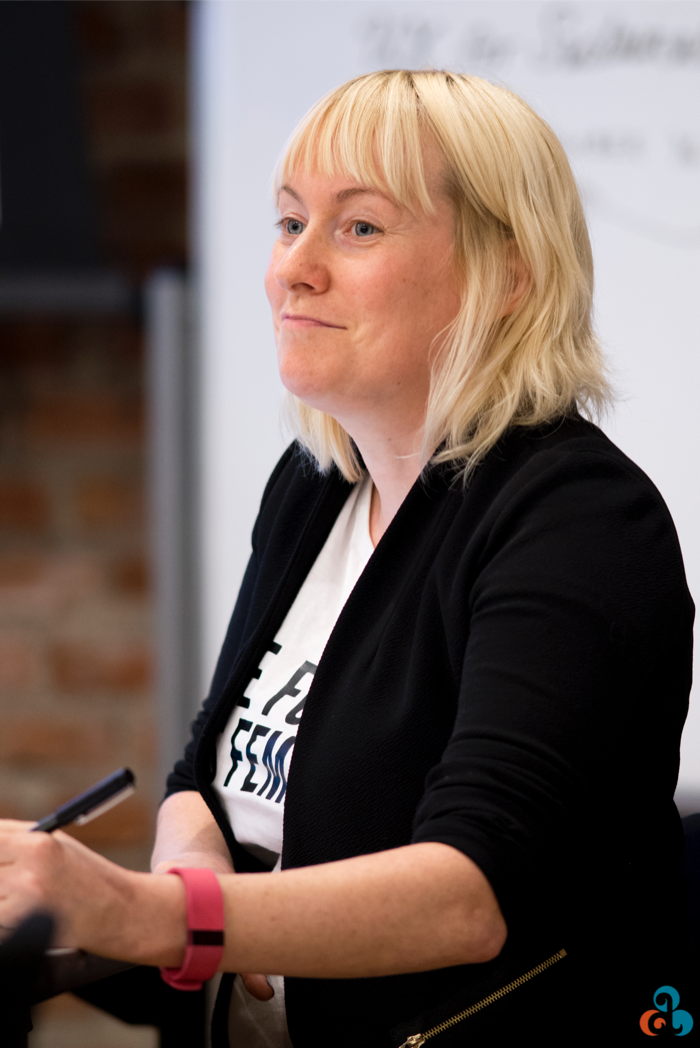
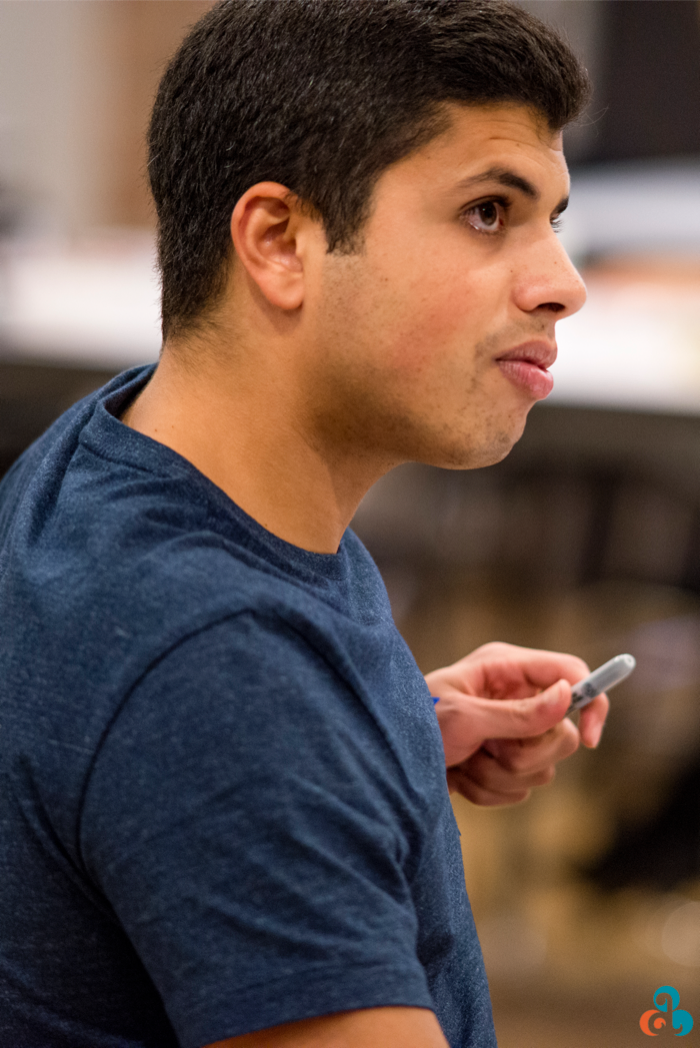
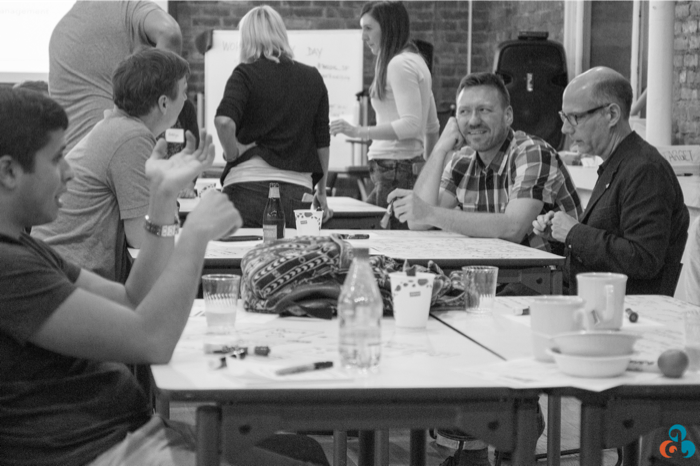
Aligned with Nominal Group Theory's purpose, we also saw a variety of solutions that seemed pretty well fleshed out for the very short timeframe of the exercise. Even when group members' ideas coincided, there were rich discussions about how to implement them.
One of our facilitators, Lisa Lehrman, wrote about her group's experience.
Postscript. This project reminded me that sustainability in design isn’t only about outcomes — it’s about how we work together to reach them. Designing and facilitating this workshop showed that empathy can be built into process. We cultivated shared language, designed inclusive facilitation, and created space for reflection. The experience continues to shape how I approach complex systems today — whether guiding teams through AI adoption, designing content frameworks, or helping organizations align technology with human values. November 8, 2025
Side Note. When Josefin and I planned this event, we intentionally chose a topic we could return to — one that would deepen our UX skills and connect meaningfully with both local and global communities. What we didn’t anticipate was that the event would take place just days after the 2016 U.S. presidential election. A lot shifted that week, and in subsequent years — in tone, attention, and collective energy. We moved forward anyway, holding space for conversation and care. Looking back, it feels like a small but significant act of design resilience.
Framing problems and needs into a hands-on UX workshop shows how thoughtful structure can make empathy tangible — and collaboration genuinely productive.